- Bone Health
- Immunology
- Hematology
- Respiratory
- Dermatology
- Diabetes
- Gastroenterology
- Neurology
- Oncology
- Ophthalmology
- Rare Disease
- Rheumatology
Adalimumab Biosimilar Sustains Efficacy After Switch in Saudi Cohort
Saudi real-world study finds adalimumab biosimilar switching preserves efficacy and safety, with full response in patients with HS.
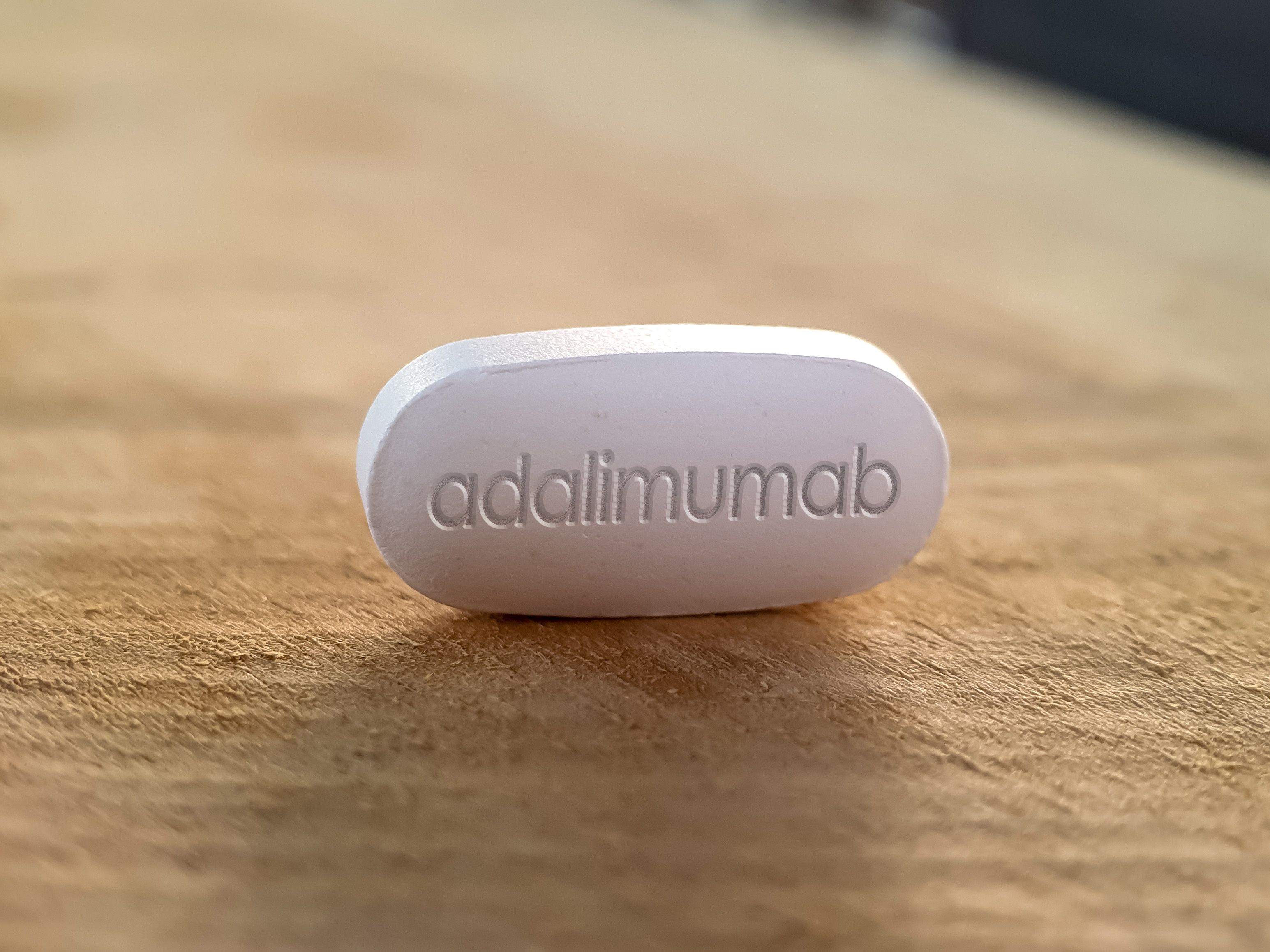
Adalimumab biosimilars maintained favorable efficacy and safety after patients with psoriasis or hidradenitis suppurativa (HS) switched from the originator, according to a retrospective single-center study conducted in Riyadh, Saudi Arabia.1 The findings, published in the Saudi Medical Journal, add region-specific evidence to a literature that remains limited outside Europe and North America.


Adalimumab biosimilars maintained favorable efficacy and safety after patients with psoriasis or HS switched from the originator. | Image credit: Soni's - stock.adobe.com
Study Design and Population
Investigators reviewed electronic medical records from King Abdulaziz Medical City and King Abdullah Specialized Children's Hospital, identifying 57 pediatric and adult patients who had been treated with originator adalimumab (Humira; AbbVie) before switching to the biosimilar Amgevita between 2016 and 2022. The switch followed a hospital-wide policy change driven primarily by cost considerations rather than clinical concerns.
Most patients (93%) were adults, just over half were women (50.9%), and more than a third (35.1%) had obesity. Plaque psoriasis was the most common diagnosis (72.5% of the psoriasis subgroup), whereas 35.3% of patients had psoriatic arthritis; 6 patients (10.5%) had HS.
Efficacy Findings Diverged by Diagnosis
Every patient with HS maintained clinical improvement after switching to the biosimilar, including one patient who had shown suboptimal adherence to the originator. Responses among patients with psoriasis were more mixed, with 68.6% responding favorably, 19.6% showing no improvement, and 11.8% experiencing worsening after the switch. The authors noted this divergence may reflect underlying differences in disease mechanism or individual variation in treatment response rather than a biosimilar-specific effect.
Two variables were significantly associated with biosimilar response: absence of obesity (P = .012) and prior clinical improvement on the originator (P = .022). Obesity has previously been linked to a roughly 60% higher likelihood of anti-tumor necrosis factor treatment failure across inflammatory diseases, a finding the authors cited as consistent with their own results.
Safety Profile Remained Consistent
Adverse events were infrequent overall, occurring in 1 patient with HS (16.7%) and 4 patients with psoriasis (7.8%) after the switch, most commonly bone pain and joint stiffness. One case of grade 2/4 biosimilar-associated hepatitis led to treatment discontinuation, a finding the authors flagged as unusual given that hepatitis has been rarely reported with adalimumab biosimilars in the published literature.
Despite these events, the difference in adverse event rates between originator and biosimilar exposure was not statistically significant (P = 1.000), supporting a comparable safety profile.
How These Findings Compare With Other Switching Studies
The Saudi results contrast with some European data on nonmedical switching. A Danish nationwide study of patients with psoriasis who underwent a mandatory switch from originator to biosimilar adalimumab found that lack of efficacy was the leading reason for treatment discontinuation, though most patients maintained disease control.2 That study similarly found that patients who had previously done well on the originator were more likely to sustain response after switching, a pattern mirrored in the Saudi cohort.1
The authors also pointed to differing outcomes reported in Italian and Spanish HS cohorts, where switching was associated with greater loss of effectiveness, underscoring that biosimilar switching outcomes may vary by population and setting.
Implications for Practice
The study's authors described their data as an early step toward closing a regional evidence gap, noting that adalimumab biosimilar use among Saudi dermatologists has been sparsely documented until now.
They called for larger, multicenter, longitudinal studies to confirm long-term immunogenicity and safety since the single-center design and modest sample size, particularly within the HS subgroup, limit how broadly these findings can be generalized.
References
- Najjar RH, Alrashid SO, Almahfouz RF, Alzahrani HT, Aleissa MY, Hakami AR. Safety and efficacy of adalimumab biosimilar in psoriasis and hidradenitis suppurativa: a clinical experience. Saudi Med J. 2026;47(11):1196-1201. doi:10.15537/1658-3175.8808
- Loft N, Egeberg A, Rasmussen MK, et al. Outcomes following a mandatory nonmedical switch from adalimumab originator to adalimumab biosimilars in patients with psoriasis. JAMA Dermatol. 2021;157(6):676-683. doi:10.1001/jamadermatol.2021.0221
Newsletter
Where clinical, regulatory, and economic perspectives converge—sign up for Center for Biosimilars® emails to get expert insights on emerging treatment paradigms, biosimilar policy, and real-world outcomes that shape patient care.