- Bone Health
- Immunology
- Hematology
- Respiratory
- Dermatology
- Diabetes
- Gastroenterology
- Neurology
- Oncology
- Ophthalmology
- Rare Disease
- Rheumatology
Biosimilar ABP 654 Maintains Efficacy, Safety After Repeated Switching From Ustekinumab
Trial data show switching between ABP 654 and reference ustekinumab maintains similar psoriasis control, safety, and immunogenicity, supporting FDA interchangeability confidence.
Patients with moderate to severe plaque psoriasis who alternate between a reference biologic and its biosimilar counterpart don't have to worry that the change in manufacturer will compromise their treatment outcomes, according to new trial data supporting interchangeability between ABP 654 and the ustekinumab reference product.1


Trial data show switching between ABP 654 and reference ustekinumab maintains similar psoriasis control, safety, and immunogenicity, supporting FDA interchangeability confidence. | Image Credit: pimentos - stock.adobe.com
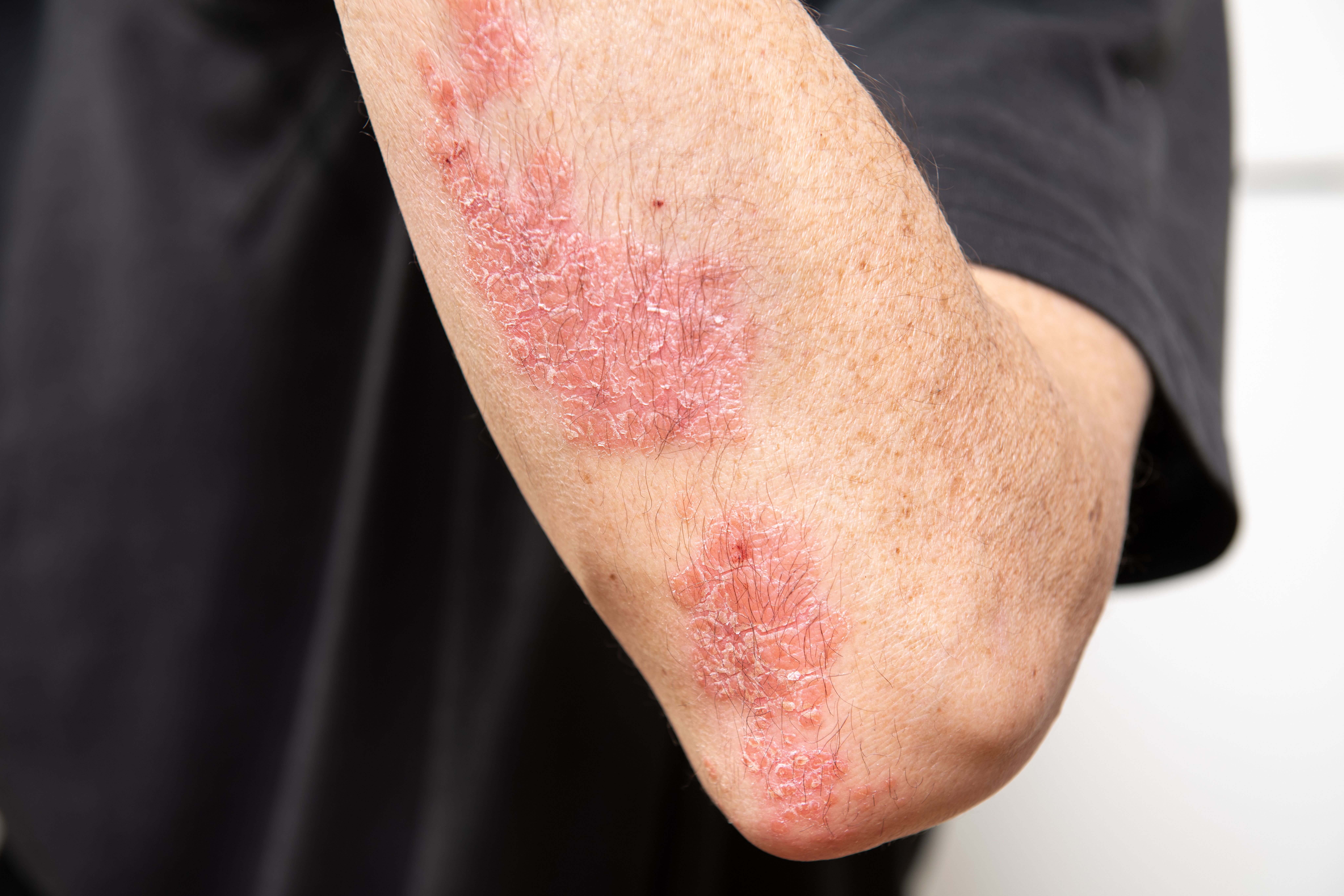
The randomized, double-blinded study evaluated pharmacokinetics (PK), efficacy, immunogenicity, and safety following 3 switches between ABP 654 (ustekinumab-auub; marketed as Wezlana/Wezenla) and the ustekinumab reference product (Stelara) in adults with moderate to severe plaque psoriasis. The findings, published in the British Journal of Dermatology, contributed to the FDA's October 2023 approval of ABP 654 as the first interchangeable biosimilar to ustekinumab available in the US.
Why Interchangeability Data Matter for Biosimilar Adoption
Although biosimilars share the same amino acid sequence, structure, mechanism of action, and clinical performance as their reference products, US pharmacists cannot substitute a biosimilar for its reference product without prescriber consultation unless the FDA has designated it interchangeable. That designation requires demonstrating that switching between the 2 products carries no greater risk to safety or efficacy than remaining on the reference product alone, a bar intended to ease provider and patient concerns about switching therapies.
Real-world evidence has echoed these controlled-trial findings across other dermatologic biologics. A systematic review of real-world switching studies among patients with psoriasis, psoriatic arthritis, and hidradenitis suppurativa who transitioned between originator and biosimilar versions of adalimumab, etanercept, and infliximab found that switching was generally safe and effective, though a subset of patients experienced treatment discontinuation linked to perceived loss of efficacy or adverse events rather than objective disease measures.2
The review's authors pointed to the nocebo effect, in which negative patient expectations rather than pharmacologic differences may drive perceived treatment failure, as a possible explanation for these outcomes, underscoring the importance of patient and provider education alongside robust interchangeability data like that generated in the ABP 654 trial.
Trial Design Included Run-In and Switching Periods
The trial (NCT04761627) enrolled 494 patients across 87 centers in 8 countries.1 During a run-in period, participants received the reference product at day 1, week 4, and week 16. Of these, 453 patients achieved at least a 50% improvement in Psoriasis Area and Severity Index (PASI) score and were randomized in a 1:1 ratio to a Continued-Use group (n = 225), which stayed on the reference product at weeks 28, 40, and 52, or a Switching group (n = 228), which received ABP 654 at week 28, the reference product at week 40, and ABP 654 again at week 52. Baseline characteristics were comparable between groups, with a mean age of approximately 47 to 48 years, mean baseline PASI scores near 20, and roughly 40% of patients in each group having prior biologic exposure for psoriasis.
The study's primary endpoints, area under the concentration-time curve and maximum concentration between weeks 52 and 64, produced geometric mean ratios of 0.93 and 0.95, respectively, both falling within the prespecified similarity margin of 0.8 to 1.25. Secondary PK measures, including trough concentrations at steady state, also remained within this range at each assessed time point.
Efficacy and Safety Outcomes Were Comparable
At week 64, patients in the switching and continued-use arms showed similar PASI percent improvement from baseline (88.8% vs 88.7%, respectively), along with comparable rates of PASI 75 response (83.3% vs 82.8%) and PASI 100 response (36.1% vs 35.8%). Rates of antidrug antibodies were likewise comparable between groups, and adverse events occurred at similar frequencies, largely of mild to moderate severity, with grade 3 or higher events reported in 2.8% of patients in each arm.
The authors noted the trial results indicate "any reduced efficacy or safety resulting from switching between ABP 654 and ustekinumab [reference product] is not greater than the risk of ustekinumab [reference product] treatment without switching."
Limitations Center on Responder Population
Because only patients who achieved at least a PASI 50 response during the run-in period advanced to randomization, the efficacy, safety, and immunogenicity findings apply specifically to treatment responders and may not extend to primary non-responders or those with evolving disease. The authors emphasized, however, that the trial was powered specifically to detect PK similarity, an outcome not expected to be meaningfully influenced by responder status.
The results arrive as FDA guidance has evolved: as of June 2024, the agency indicated that dedicated switching studies are generally no longer required to support interchangeability designations, with manufacturers instead able to rely on scientific justification from existing biosimilarity data.
References
- Blauvelt A, Bagel J, Pinter A, et al. Repeated switching between biosimilar ABP 654 and reference ustekinumab in patients with moderate-to-severe plaque psoriasis: a randomized, double-blinded clinical trial to support interchangeability. Br J Dermatol. Published online May 29, 2026. doi:10.1093/bjd/ljag218
- Nicoletti MM, Crisci E, Pentella C, Cantone A, Ruggiero D, Anatriello A, Scavone C. Switching between originators and biosimilars in dermatology: a systematic review of real-world clinical studies. Biologics. 2023;3(2):95-115. doi:10.3390/biologics3020006
Newsletter
Where clinical, regulatory, and economic perspectives converge—sign up for Center for Biosimilars® emails to get expert insights on emerging treatment paradigms, biosimilar policy, and real-world outcomes that shape patient care.