

- Bone Health
- Immunology
- Hematology
- Respiratory
- Dermatology
- Diabetes
- Gastroenterology
- Neurology
- Oncology
- Ophthalmology
- Rare Disease
- Rheumatology
Q&A With Chelsee Jensen, PharmD: FDA Policy Shifts, Biosimilar Development Hurdles, and Market Access in 2026
Mayo Clinic’s Chelsee Jensen, PharmD, discusses FDA policy changes, biosimilar development hurdles, denosumab lessons, and payer access strategies.
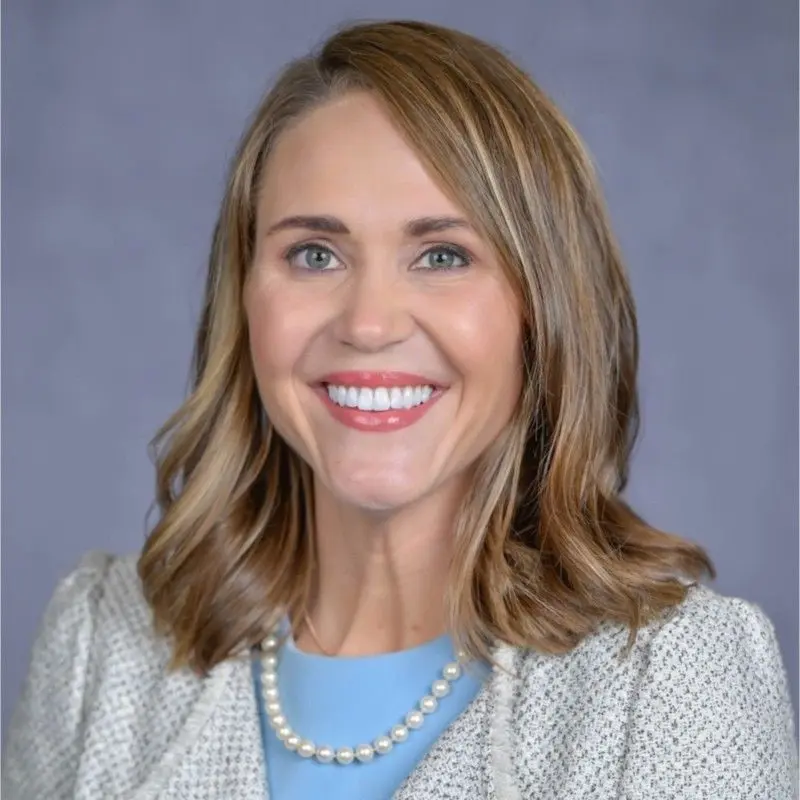
Chelsee Jensen, PharmD, BCPS, senior pharmacy specialist and pharmaceutical formulary manager at Mayo Clinic, shared her insights on future biosimilar development amidst recent FDA approvals and policy changes.
In an interview with The Center for Biosimilars® (CFB), Jensen expanded on how recent changes in the biosimilar landscape might affect payers and patients.


Mayo Clinic’s Chelsee Jensen, PharmD, shares how FDA guidance, pricing pressures, and formulary strategy are shaping the next wave of biosimilars.
This transcript was lightly edited for clarity.
CFB: Given that roughly 90% of biologics coming off‑patent may lack a biosimilar, what proactive strategies should health systems adopt now to safeguard patient access and cost containment?
Jensen: From a health system perspective, this is a really challenging area because, as costs stay high, reimbursement might not always cover that medication expense from a health system perspective. I think for health systems to keep providing care without taking on major losses, we need to have effective site-of-care management strategies in place and strong contracting skills. The most cost-effective strategy for health systems may be to join forces and advocate with manufacturers, nonprofits, and coalitions to develop biosimilars, especially where spending is high and competition is limited.
Additionally, I do think incentives are needed to encourage biosimilar development and help lower the overall cost of health care. This could require financial support from the federal government and nonprofit organizations.
It is promising to see that there has been a recent legislative change and efforts aimed at reducing biosimilar development costs by limiting some of those comparative effectiveness studies, especially when that robust analytical data is there to support it. However, I think challenges will still remain, since it is still quoted that the cost to develop a biosimilar in the US ranges anywhere from $75 million up to $250 million.
I think we do have a way to go, from a health care system perspective; the best we can do is create those coalitions so we can try to incentivize the development of biosimilars in some of those vacant categories.
CFB: The FDA’s new draft guidance simplifies analytical comparability and clinical bridging. Which specific elements do you think will most accelerate time-to-market for future biosimilars?
Jensen: The advancement of analytical technologies that are able to detect those differences or similarities with greater accuracy, and when combined with expanded access to sensitive measurement tools, will enhance the reliability of that analytical data. This improvement is expected to diminish the reliance on those in human trials and therefore reduce or lower the development costs. By having these superior technologies, we should be able to see earlier submissions of biologic license applications (BLAs), potentially leading to expedited approvals and accelerated markets.
CFB: The recent approval of multiple denosumab biosimilars in a single year shows rapid market expansion. What lessons can be drawn from that experience for upcoming biosimilar launches in other high-revenue biologics?
Jensen: The recent guidance update that removed the requirement for the comparative effectiveness switching studies to achieve interchangeability designations does mark significant progress and has positively impacted the denosumab category, likely encouraging greater adoption. I think this category is particularly noteworthy as well, because denosumab is predominantly a medical benefit drug, though there might be some pharmacy benefit coverage as well, and it mainly affects older adults, where we see more government-insured, Medicare, or Medicare Advantage payer populations.
Here at Mayo Clinic, we're really focused on learning how we can more effectively manage biosimilar switches and biosimilar adoption by utilizing our electronic health record tools and exploring ways to enhance category flexibility through the electronic health record moving forward; meaning, with the product we change, how can we rapidly incentivize and do proactive conversion? And when we do have that flexibility down the road, should the contract change while we're still under negotiation in this category?
I do suspect that most health care institutions may choose to contract with 1 manufacturer for both Prolia and Xgeva (denosumab; Amgen) biosimilars. However, because there's such strong competition in this category, it could be that we select one manufacturer for its Prolia biosimilar and another manufacturer for its Xgeva biosimilar, also in this category. It's not new, because Prolia and Xgeva have always shared the same Healthcare Common Procedure Coding System code. We are seeing that same trend with the biosimilars.
However, there’s still a need to keep a pulse on this, making sure that we're not running into any downstream billing errors and denials because of that shared fixed code. [We should continue] to rely on that provider education and how we build these on the electronic health record to make sure that we are selecting the appropriate product for the appropriate indication.
CFB: When several biosimilars compete for the same reference product, what criteria (clinical data, pricing, real-world evidence, patient-support programs) become most decisive for formulary placement at Mayo Clinic?
Jensen: At Mayo Clinic, at this stage, we really have a high level of confidence in the clinical data coming from the process for a vast majority of the biosimilar assets. I think the final decision will likely depend on factors such as supply resiliency, manufacturer reputation, and history and pricing, because in the denosumab categories, specifically, this is a heavy government population, and I don't think co-pay assistance really plays a role here, as we know that many of our government programs are exempt from co-pay assistance for assistance programs.
However, other categories that are coming out, like omalizumab, Xolair biosimilars, natalizumab, and Tysabri biosimilars, do have a higher volume of commercially insured populations, and therefore copay assistance and payer coverage are some aspects that I do expect would be important considerations for those categories, but not really a focus for the denosumab category.
CFB: What early warning signals does Mayo Clinic monitor to anticipate a ‘biosimilar void’ for a specific reference product, and how do those signals shape your formulary strategy?
Jensen: Where we're really pivoting here at Mayo Clinic is [finding] a more robust way to monitor the financial performance and outcomes of our whole drug portfolio. We really worked on internal tools to track our drug costs, our reimbursement, and broader financial trends more efficiently. That way, we can determine where we are having reimbursement issues, and we're able to dig in. Is this due to a denial or to a prior authorization issue that maybe we can update within the electronic health record, or [something to] discuss with our providers? Or is this because our reimbursement is simply not covering our costs? Therefore, is the average sales price far below what we have to purchase the drug at?
When we get into those later line agents, of course, we'll try to negotiate and try to get better pricing on the drug, but this is where we're really seeing that biosimilar void. I know we can't get any better pricing. I know this drug is off patent, and we don't have any competition coming. And that's really where we have to have some of those other harder discussions, saying, What else can we do in this category? Could we potentially start partnering with a coalition (eg, Cost Plus, Civvica) or some of our other coalitions to really incentivize the development of these drugs?
Lowering that development cost because of the greater good that we need this type of drug in the US market, and that's where we're going. Where I think this biosimilar void does factor in is if we're not seeing any competition. This is really where healthcare institutions may have to make difficult decisions to move these drugs out to 340B facilities, or if they're an orphan drug, disproportionate share hospitals, and that's where access really could get limited for patients, and that's really where I hope we don't have to go in the market. But I’m sure that is where some health care institutions currently are in decisions that they might be facing right now.
Newsletter
Where clinical, regulatory, and economic perspectives converge—sign up for Center for Biosimilars® emails to get expert insights on emerging treatment paradigms, biosimilar policy, and real-world outcomes that shape patient care.


